
Local Citations for Smoke Shops: What to Fix First
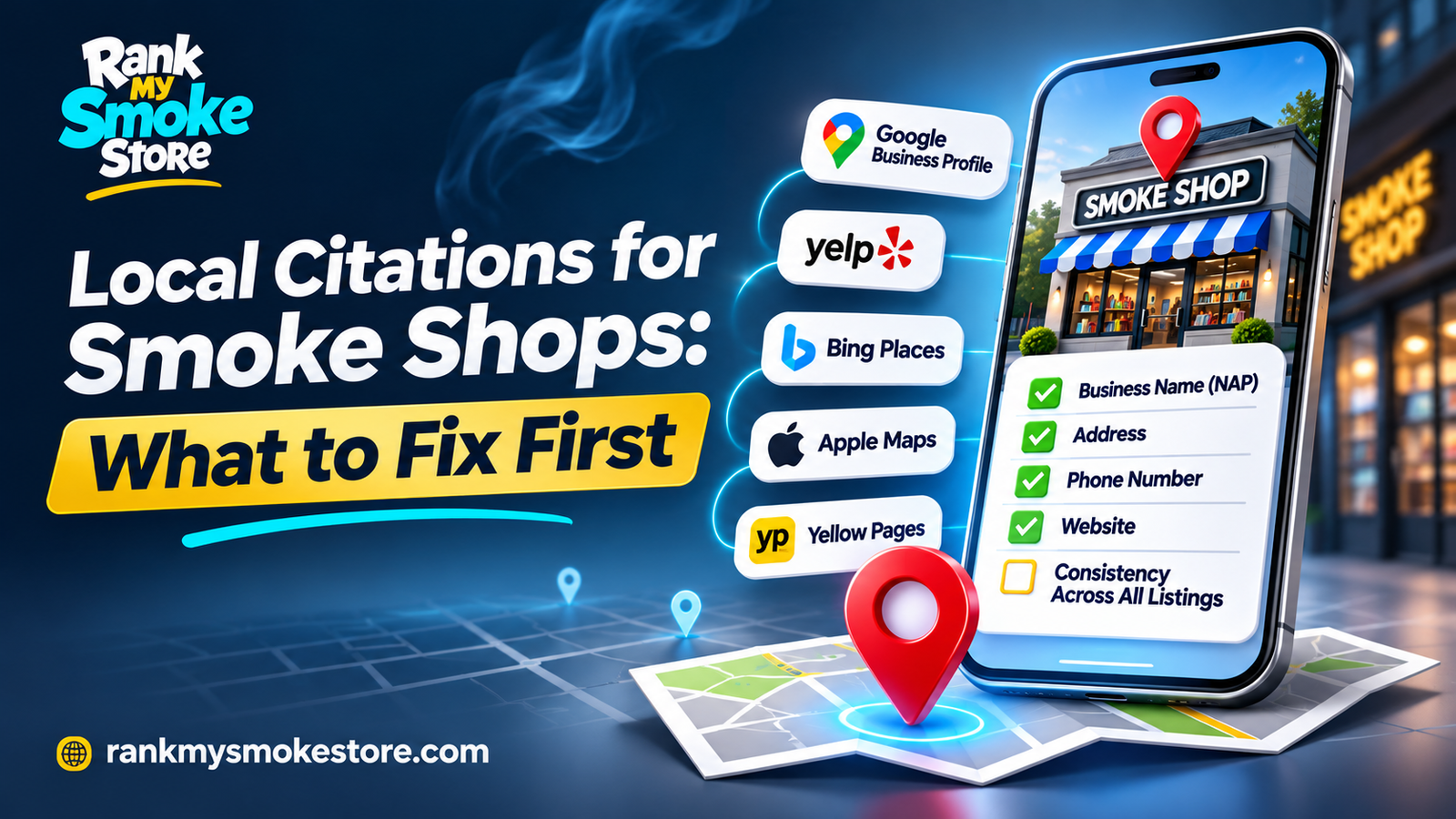
A local citation is a mention of a business and its identifying information on another website or directory. For a smoke shop, that may include its name, address, telephone number and website.
The practical purpose is straightforward: people should find the right store and accurate details. Buying hundreds of listings without checking where they appear or what they say is a poor substitute for maintaining the listings customers actually encounter.
Create One Reliable Business Record
Before editing directories, create a master record of the current business name, street address, unit number, phone, website, hours and relevant description. Add the actual store-opening or relocation details if older listings may exist.
For multiple stores, keep a separate record for each location. A shared brand does not mean every listing should use the head office address or the same location page.
Use a real, customer-facing name rather than a string of keywords. Google’s business representation guidelines are a useful reference for accurate naming and location information on its own platform.
Find Existing Listings Before Creating New Ones
Search the current store name, old names, address and phone number. Record the relevant URLs in a spreadsheet.
For each listing, note whether it is correct, outdated, duplicated or no longer relevant. Also record whether your team controls the account and who can approve changes.
This inventory often reveals a more important task than creating new listings: correcting a phone number that sends customers elsewhere or an old address that suggests the business has moved twice.
Do not delete legitimate historical information indiscriminately. Determine whether a listing should be updated, marked closed or handled through the platform’s duplicate-resolution process.
Prioritize Real Customer Exposure
Start with listings that appear when you search the business, major maps services your customers use and relevant local organizations. Then evaluate additional directories individually.
Ask whether the platform permits your business category, serves a relevant audience and offers a useful business record. Avoid submitting to a directory solely because an agency promises a particular number of citations.
Google’s link-spam policy includes low-quality directory links among its examples. A directory should have a reason to exist beyond supplying links to unrelated businesses.
Correct Important Differences First
An incorrect address, disconnected phone number or broken website link deserves immediate attention. Minor differences in formatting are a different priority from information that sends someone to the wrong place.
Check the destination URL after every update. For a multi-location retailer, link to a relevant store page when that is the most useful destination and the directory supports it.
Our multi-location SEO guide explains how individual store pages can provide location-specific information without duplicating the entire website.
Keep Control of the Accounts
Use business-controlled accounts and document which team member has administrative access. When working with a provider, agree on how access will be transferred or removed at the end of the engagement.
Do not accept a report that lists only the number of submissions. Request the actual listing URLs and their status. “Submitted” does not necessarily mean approved, publicly visible or accurate.
Record fees and renewal terms for paid directories. A recurring listing should be evaluated as a business expense, including whether it produces relevant exposure or inquiries.
Review Citations After Business Changes
A move, new phone number, rebrand or change of hours can leave outdated information across multiple sites. Use the inventory to update important records systematically.
Schedule a follow-up check because some platforms review edits before displaying them. Keep evidence of the requested change and note anything that remains unresolved.
For routine maintenance, use a manageable review schedule and prioritize high-visibility listings. There is no benefit in repeatedly changing accurate information merely to show activity in a monthly report.
Measure Accuracy and Useful Referrals
Track corrected listings, resolved duplicates, working links and relevant referral traffic where measurable. Keep those observations separate from claims about ranking improvement.
A citation cleanup may remove customer confusion even when its individual SEO effect cannot be isolated. That is a valid operational outcome.
Ask Rank My Smoke Store to review your local information. Start with the listings customers can already find, then decide whether additional placements serve a genuine purpose.