
Smoke Shop Website or Ecommerce Store: Which Do You Need?
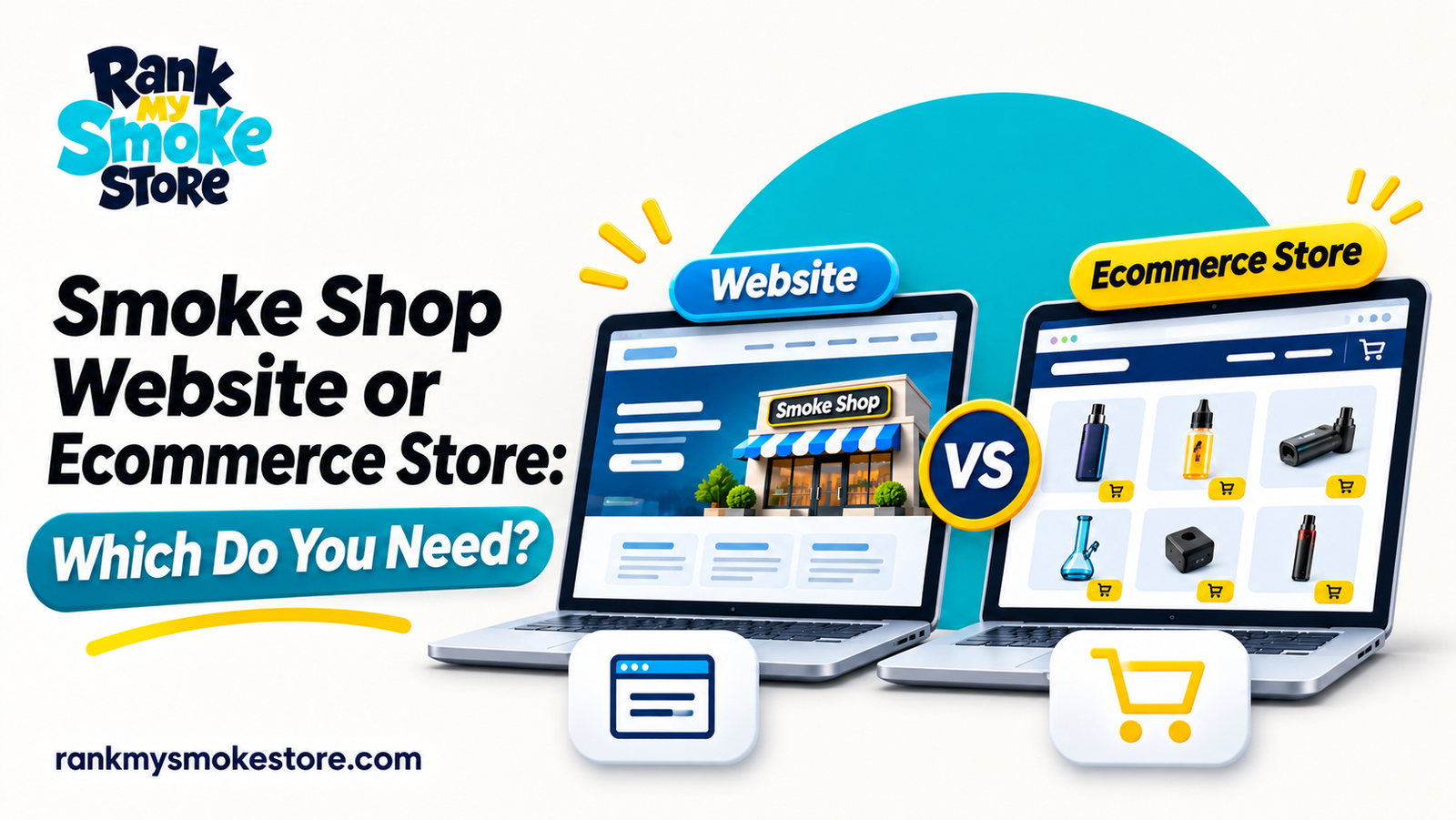
A website does not need online checkout to be useful. For a physical smoke shop, helping adult customers find the store, understand its offering and contact the team may be the right first objective.
An ecommerce store serves a different operational model. It adds ordering, payments, inventory, fulfillment and support requirements that continue after the website launches. Choose the model your business is ready to operate, not the one with the longest feature list.
Define the Main Customer Action
Write down what you want a visitor to do after arriving. If the priority is calling or visiting a local store, design the site around that journey.
If the priority is completing an online purchase, list everything needed to support that transaction accurately. The website cannot make operational decisions that the business has not resolved.
For a multi-location business, clarify whether online information should route customers to a particular store. A single general contact button may be insufficient when availability and opening hours differ.
When a Store-Information Website Fits
A store-information site can be appropriate when the business primarily serves walk-in customers, does not have an approved online selling setup or wants to establish a useful digital presence first.
Its core pages should explain the business, real locations, current hours, broad product categories and contact methods. Add clear directions and genuine store photography where useful.
Keep product availability language accurate. If the website does not maintain live inventory, do not imply that every displayed item is currently available. Tell customers how to confirm details with the store.
This model still requires maintenance. Incorrect hours on a simple website can frustrate customers just as much as incorrect information in a large catalog.
When Ecommerce May Fit
Ecommerce requires a defined product catalog, reliable stock handling, an accepted payment arrangement and an appropriate fulfillment process. Confirm the requirements for your products and sales destinations with the relevant providers and qualified advisers before committing to the build.
Do not assume that a website platform, an age-gate popup or a payment plugin establishes permission to sell or ship every item. These are separate questions that must be resolved for the actual business.
Document order support, returns, product information ownership and the person responsible for resolving failed transactions. A polished checkout is only one part of an operational store.
Understand the Difference in Scope
Our GiantNic development case study describes catalog architecture, brand and collection navigation, product variations and cart functionality. Those features illustrate why ecommerce scope extends beyond adding a payment button to a brochure-style site.
For a smaller business, some of those functions may be unnecessary. Compare the planned features with the actual catalog and team capacity before approving them.
Use our smoke shop website cost guide to distinguish initial development from continuing operating expenses.
Match SEO to the Business Model
A local store-information site should provide useful location and business pages. An ecommerce site also needs a navigable catalog, clear product details and a strategy for managing changing inventory.
Google’s ecommerce site-structure documentation explains how category-to-product links help discovery. That structure is a development requirement to plan, not just an article-writing task.
Search features also have distinct eligibility rules. Google’s product-snippet guidance excludes tobacco and vaping content from that rich-result feature. Do not build a forecast around enhanced listings that the products cannot qualify for.
Consider a Phased Approach
If online operations are not ready, begin with accurate store information and a maintainable website. Plan the architecture so future expansion can be assessed without promising functionality before the business is prepared.
Write down which decisions are deferred and what must happen before reconsidering them. Examples include confirming provider acceptance, preparing product data or assigning fulfillment responsibility.
Avoid publishing inactive shopping buttons or misleading product availability as a temporary compromise. A clear information website is more useful than an unfinished ecommerce promise.
Choose Based on Readiness
Before deciding, ask who will maintain the catalog, handle support, update business information and approve changes. If those responsibilities are unclear, resolve them as part of the brief.
Discuss the right website model with Rank My Smoke Store. We can define a scope around the business you operate now and document what a later expansion would require.