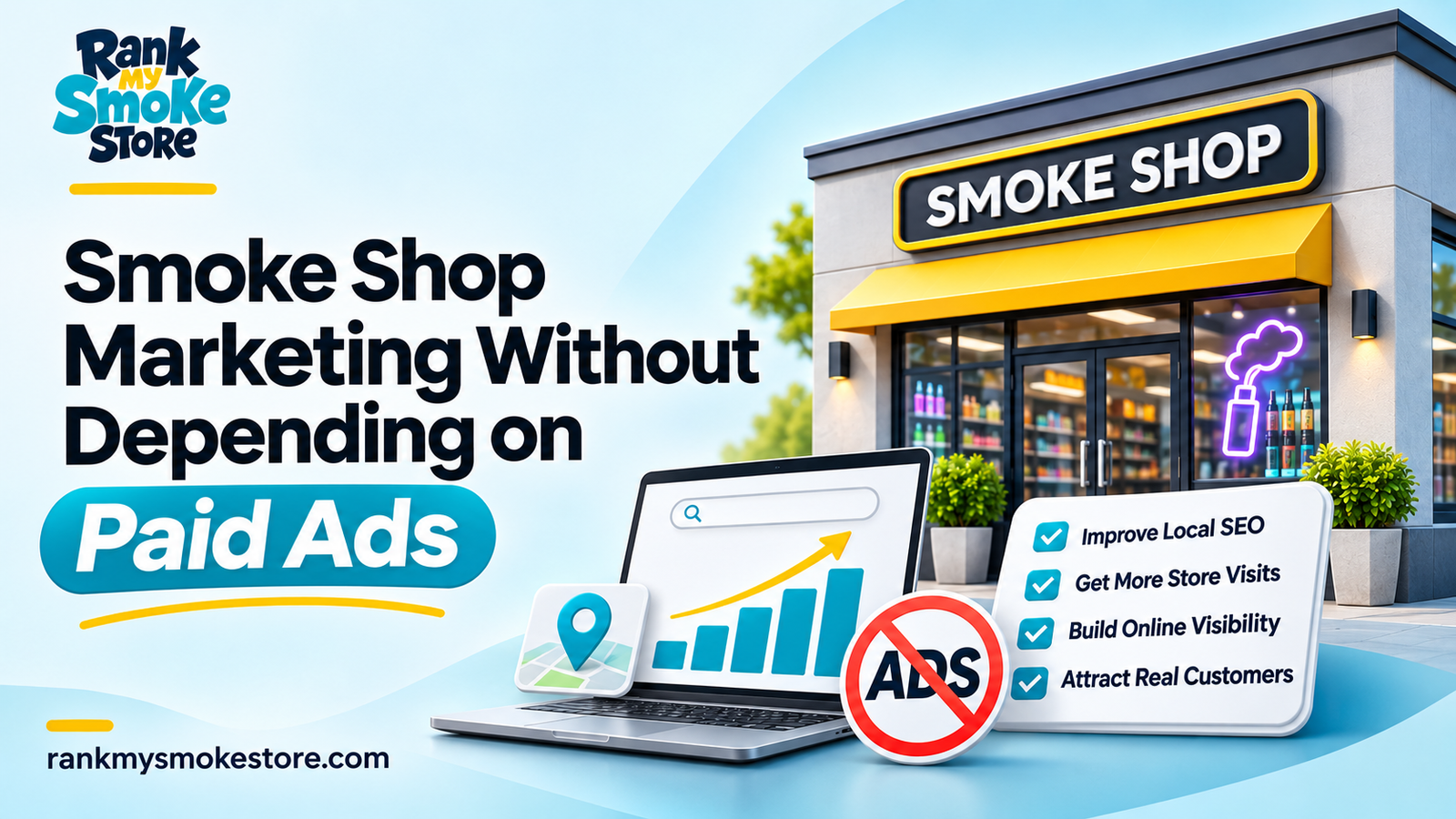
Smoke Shop Marketing Without Depending on Paid Ads
A smoke shop can spend weeks preparing an advertising campaign before discovering that the channel will not accept the products it wants to promote. A better marketing plan starts with the business model, the audience and the channels actually available.
For an independent store, that often means making it easier for adult customers to find accurate store information, evaluate the business and contact the team. Organic search can support those tasks, but it needs a useful destination and consistent maintenance.
Understand the Channel Before Committing a Budget
Google’s tobacco advertising policy prohibits ads for tobacco and certain related products, including electronic cigarettes. Check the rules for your actual products and proposed campaign before paying for creative or promising a launch date.
Do not assume that changing a product name or sending visitors through a different landing page solves an eligibility problem. Build a marketing plan around permitted activity rather than attempts to disguise what the business sells.
Website information, local business discovery and advertising are different systems. Eligibility in one does not establish eligibility in another.
Make the Store Easy to Find and Understand
Start with a simple customer journey: someone discovers the store, checks whether it meets their needs and decides what to do next.
Your website should answer practical questions before asking for a commitment:
Where is the store, and which entrance should customers use?
What are the current opening hours?
Which broad product categories does the store carry?
How can someone ask about availability?
Is the website informational, or does it support online purchases?
Give each real location a useful page when multiple stores need different addresses, hours or contact information. Avoid creating pages for towns where you have no genuine store or relevant service offering.
Choose Content That Matches a Business Need
Publishing a generic article every day is not a strategy. Start with questions your staff regularly answers and assign each question to the right page.
Opening hours belong on the location page. A recurring question about your store’s pickup process belongs in a clear service explanation. A technical product question requires a verified source and careful distinction between manufacturer information and your own observations.
Our guide to smoke shop blog ideas explains how to turn customer questions into useful briefs. The goal is to remove uncertainty, not to fill a calendar with interchangeable posts.
Build Recognition Beyond Search
Create consistent business descriptions and visual assets so customers recognize the same store across permitted channels. Your signage, website and business profiles should not look like unrelated businesses.
Maintain relationships with relevant local organizations and suppliers. A genuine business listing or editorial mention can help people discover you without requiring an advertising campaign. Evaluate these opportunities for their audience and business relevance, rather than treating every mention as a ranking shortcut.
If you maintain an email list, separate customer-service messages from marketing and use the permissions and preferences appropriate to that audience. Useful updates should give recipients a reason to remain subscribed. Repeating the same sales pitch indefinitely is not a retention plan.
See How Different Pages Work Together
Our published GiantNic SEO case study describes work across category pages, product pages, internal links and search-focused content. It illustrates a coordinated page structure rather than a strategy based only on the homepage.
For your store, the practical lesson is to assign each page a job. A category introduces a selection; a product page explains an item; a location page helps someone visit. The required mix depends on the business.
Measure Actions That Matter
Before making changes, record a baseline for the pages and customer actions you want to improve. Keep website visits, calls, direction requests, inquiries and completed sales separate. They answer different questions.
For example, more direction-button clicks may indicate stronger interest in visiting, but they are not proof of completed store visits. Ask staff which questions customers mention and compare that feedback with website behavior.
Choose a small number of improvements, document when they went live and review the results over a meaningful period. Avoid attributing every change to marketing when stock availability, seasonal demand or store hours also changed.
Start With the Largest Customer Obstacle
If customers cannot find the address, fix that before commissioning more articles. If the website explains nothing about the store, improve the core pages before chasing additional traffic.
Discuss your store’s marketing priorities with Rank My Smoke Store. We can review the existing setup and define the branding, website or SEO work that fits the next stage.