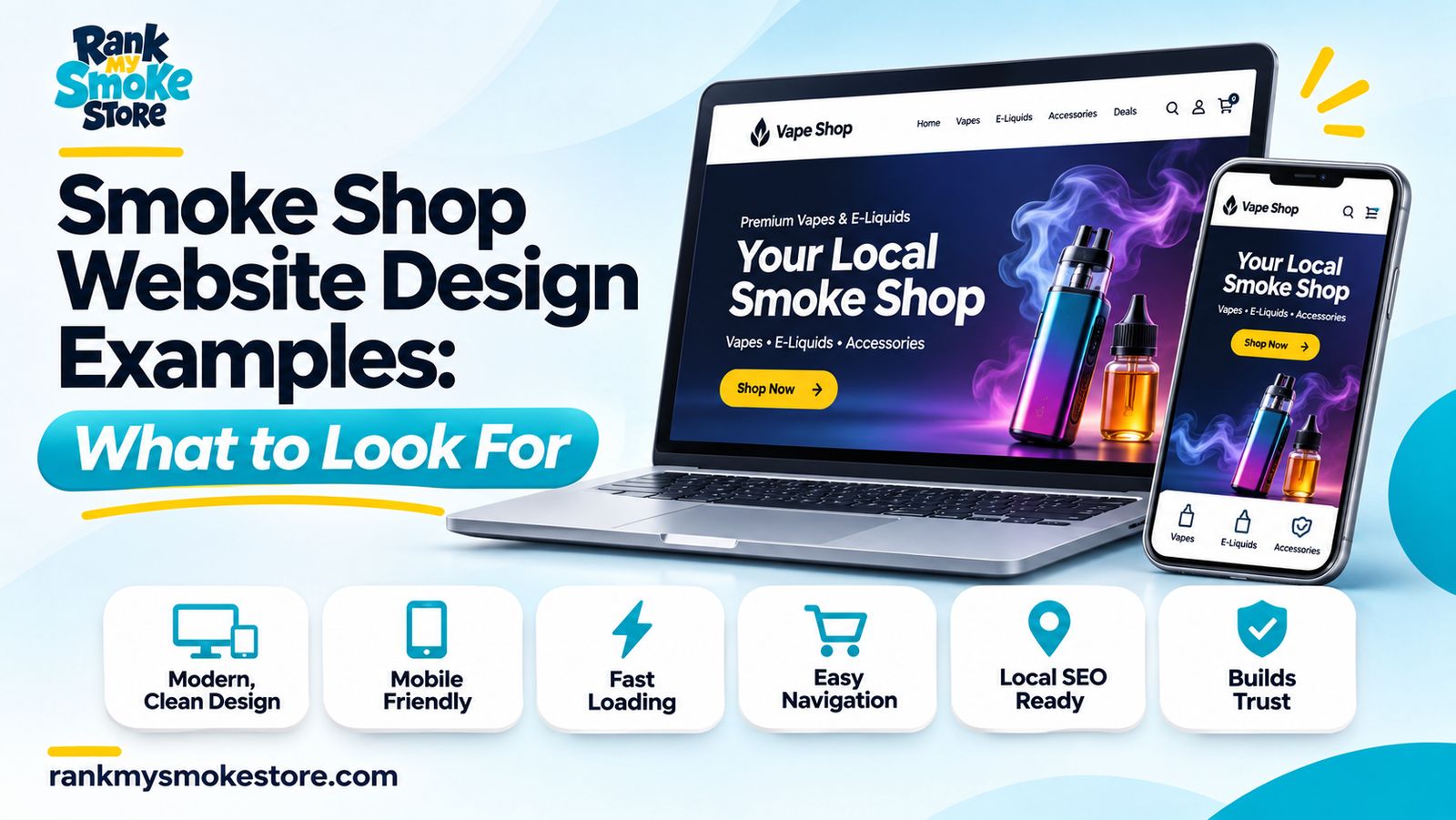
Smoke Shop Website Design Examples: What to Look For
A website portfolio can look impressive while telling you very little about whether the design will work for your store. Large product images and polished mockups are easy to notice. Navigation, inventory handling and customer support are harder to judge from a single screenshot.
When reviewing smoke shop website design examples, ask what problem each project needed to solve. A local store-information website and a large ecommerce catalog should not be assessed against the same brief.
Start With a Customer Task
Choose one realistic task before opening a portfolio example. For a physical store, that might be finding the address and calling about availability. For an ecommerce operation, it might be finding a category, comparing two products and understanding the next step.
Follow the task on a phone. Note where the layout helps and where you have to guess. A design earns its value through these ordinary interactions, not just through a strong first impression.
Use the same task across examples so your comparison is meaningful. Otherwise, you may favor the site with the most attractive photography rather than the one with the clearest structure.
Example One: Organizing a Large Catalog
Our GiantNic development case study describes a catalog organized through brand navigation, collections, product search and variation selectors. Its focus is helping visitors move through a broad inventory without making every decision from the homepage.
When reviewing a similar project, ask:
Can customers browse by the categories they understand?
Does the site distinguish brands from product types?
Are unavailable options clearly identified?
Does search help someone who already knows a product name?
These questions are more useful than asking whether your homepage should have the same banner. Your catalog may require fewer categories, different filters or no online checkout at all.
Example Two: Connecting Shopping and Support
Our iVapes development case study brings together category browsing, product details, FAQs, shipping information and contact support. The documented scope demonstrates that an ecommerce website includes the information surrounding a purchase, not only the product grid.
Look for consistency between the main shopping pages and support content. A visitor should not encounter one delivery promise on a banner and a different explanation elsewhere. Buttons should use clear language, and policies should be accessible before a customer commits.
The presence of an age gate in a portfolio is a design feature to inspect, not evidence that every legal or verification requirement has been satisfied.
Example Three: Supporting Product Variations
Our STRIO development case study describes product variations, image galleries, inventory states and structured product-detail templates. Those features matter when individual products need more explanation than a name, image and price.
During a demonstration, change a variant and inspect the result. Check whether images, availability and the selected option remain consistent. Ask how staff will update the information after launch.
A feature that looks convincing in a static design still needs implementation and testing. Request a working demonstration of the functions most important to your store.
Evaluate Accessibility and Readability
Check whether text remains readable, controls can be understood without guessing, and keyboard users can reach important links. A stylish palette is not enough if customers struggle to read the interface.
The W3C contrast guidance sets a 4.5:1 minimum for ordinary text, with specified exceptions including large text. Use a contrast checker on actual text and background combinations rather than judging from a screenshot alone.
Also test long product names, enlarged text and small screens. Real content often exposes layout weaknesses that short placeholder labels hide.
Ask What the Portfolio Does Not Show
A case study may describe completed work without proving its effect on revenue. Ask what was measured, over which dates and against what comparison before accepting a performance claim.
Useful questions for a provider include who owns the source files, how content is edited, which integrations are included and what happens when something breaks. Our website cost guide explains how these decisions affect the scope of a quote.
Use Examples to Define Your Brief
Bring two or three examples to a design conversation and explain specific features you find useful. “I like the category navigation” gives a team more direction than “make it look like this.”
View our case studies and discuss your website with Rank My Smoke Store. We can use those examples to define a practical brief for your own store.